

By Brian Keogh
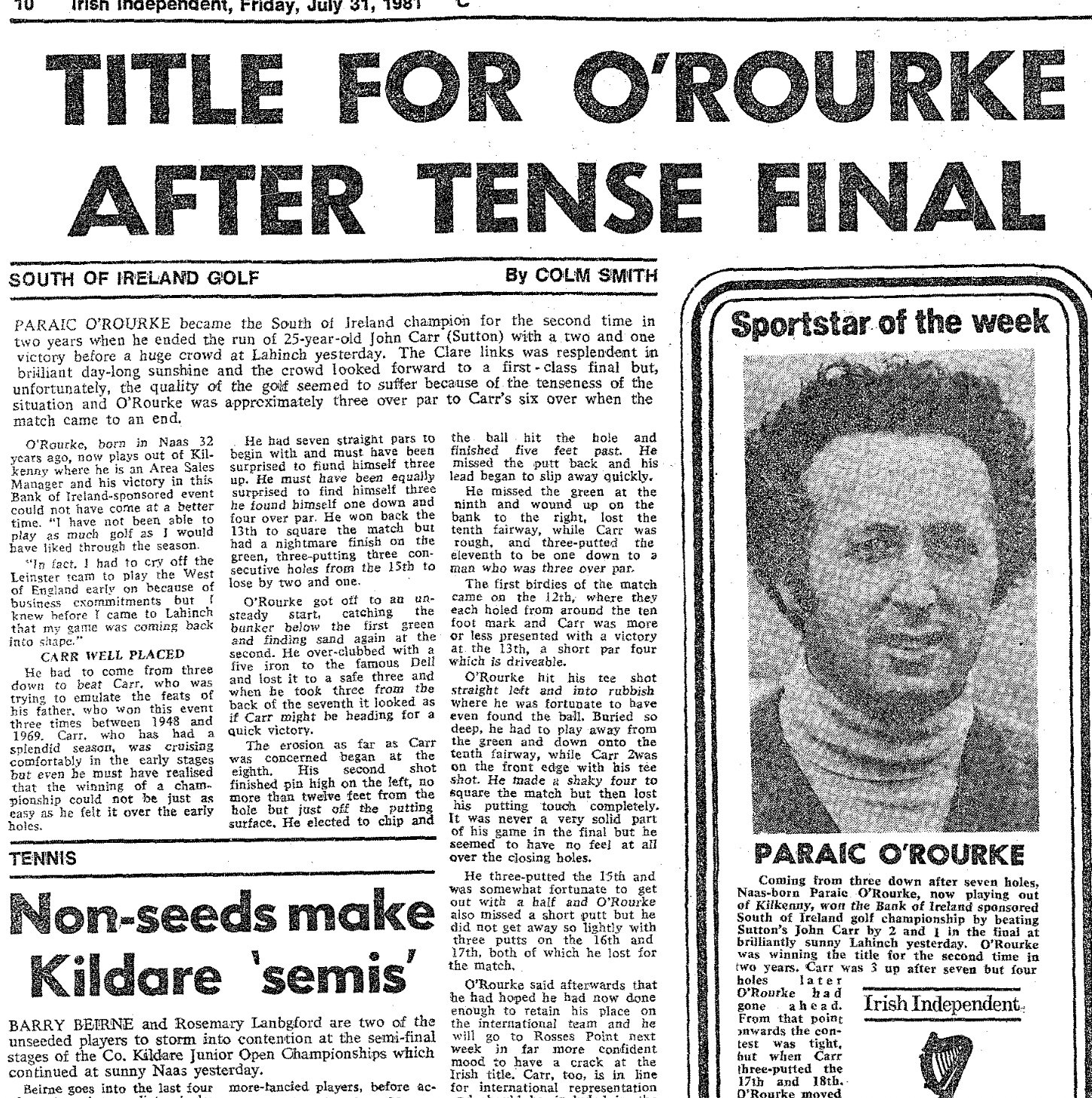
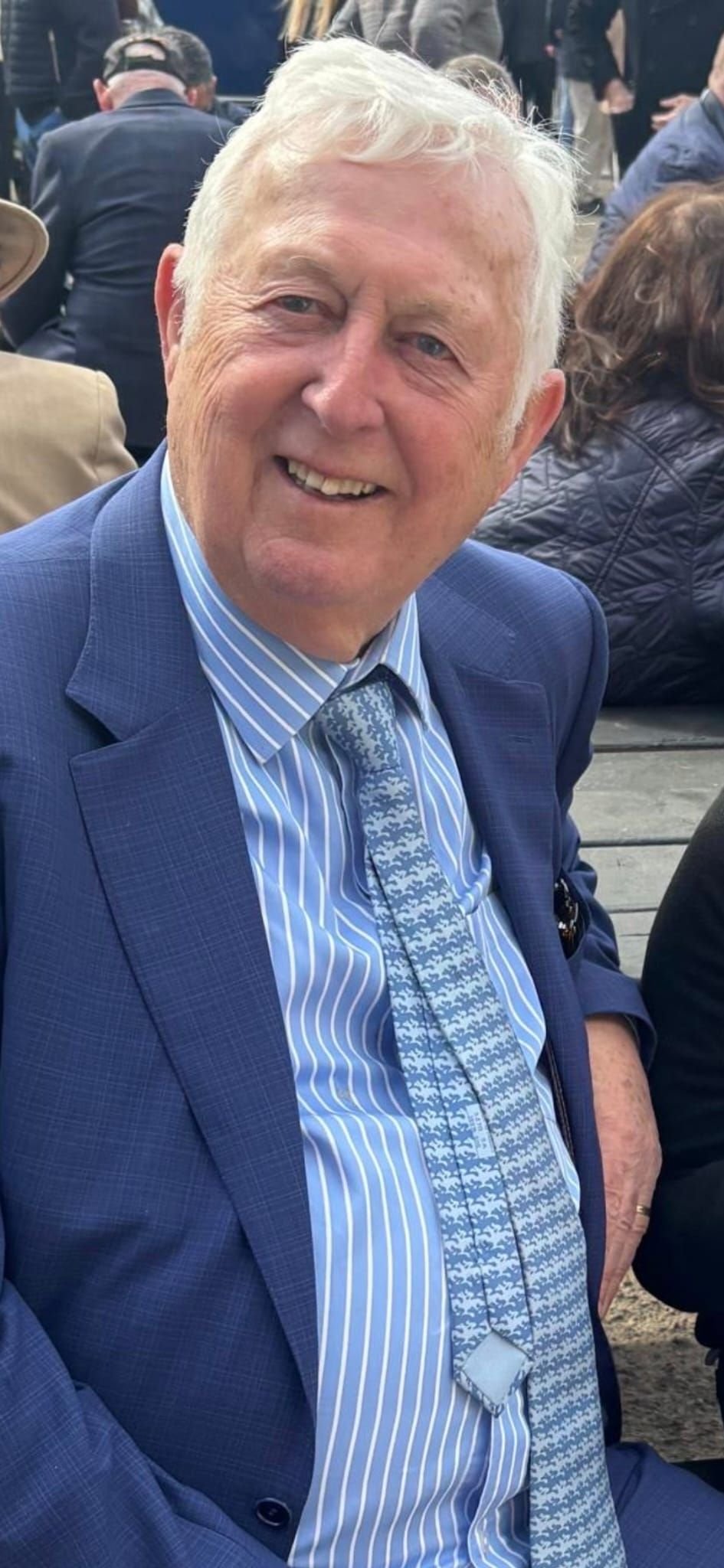
The Irish golfing community is mourning the loss of Paraic O’Rourke, a former international star whose grit and competitive spirit left an indelible mark on the amateur game.
O’Rourke, born in Naas in 1949, passed away on October 12, leaving behind a legacy defined not just by his victories, but by the respect he commanded from peers and legends alike. He is survived by his wife, Margaret, and their children, Alan and Emma.
O’Rourke’s career was marked by a distinct period of dominance in the late 1970s and 1980s. He secured the South of Ireland Amateur Open Championship three times, in 1979, 1981, and 1985, a feat that underscored his consistency in match play and stroke play formats. His talent was not confined to domestic shores; he earned 30 caps for Ireland at Senior International level, making his Home Internationals debut at Royal Dornoch in 1980.
That debut side was a formidable one, featuring future Ryder Cup stars Ronan Rafferty and Philip Walton. Between 1980 and 1985, O’Rourke proved to be a formidable asset for his country, remaining unbeaten in 50 per cent of his appearances. He was a proud representative of both Naas and Kilkenny golf clubs, but his influence extended beyond playing. He was the driving force behind the creation of Gowran Park, spearheading the project and bringing in renowned architect Jeff Howes to design the course, ensuring his vision for golf would endure in the Irish landscape.
Tributes have poured in, none more poignant than that of Paul McGinley, the former Ryder Cup captain. For McGinley, O’Rourke was more than a family friend; he was a foundational hero. O’Rourke shared a lifelong friendship with McGinley’s late father, Michael McGinley Snr, also a member at Naas. As a young boy caddying for his father at 13 or 14, Paul McGinley found himself immersed in a world of golfing lore, with O’Rourke at the centre of it.
“I played a lot with him and in a lot of ways, he was my hero because he was part of Dad’s group,” McGinley recalled. The group—which included Turlough Boylan, Tony Pearse, and Seamus Rowan—was the epicentre of McGinley’s early golfing education. “Paraic would always control the conversation because he was larger than life.”
McGinley credits O’Rourke with teaching him the intangible art of competitiveness, a lesson that served him well during his professional career and Ryder Cup captaincy. “In terms of competitiveness, I would put him right up there as one of the greatest competitors that I’ve ever seen in golf, and that includes pros,” McGinley said. “He was a wily competitor with not a huge amount of game compared to others, but just so wily and tough and cute.”
This education took place as much at the dinner table as it did on the course. Listening to O’Rourke replay matches and dissect scores was a masterclass in tournament golf. “As Bobby Jones used to say, there’s golf, and there’s tournament golf, and believe me, they’re two very different things. And I think that’s where Paraic was at too,” McGinley added.
O’Rourke’s tactical nous was legendary. McGinley vividly remembers a specific habit of O’Rourke’s: when he had the honour and found the green, he would draw his putter from the bag and flash it at the opposition. It was a psychological dagger.
“I would always do that as a matter of instinct,” McGinley admitted. “The minute I hit it on the green with the honour, I would take out the putter and lean on it.” It was a tactic born of aspiration; O’Rourke wore the Leinster sweater with the harp, and later the Irish jersey, inspiring a stirring ambition in the younger generation.
Beyond the fairways, O’Rourke was a man of simple, hearty joys, particularly horse racing. Before Michael McGinley Snr’s dementia progressed, the two friends would spend hours in O’Rourke’s front room watching the races. “They had a greater love for horse racing than they did even for golf,” McGinley said. The scene was one of warmth and chaos: Margaret bringing in tea and sandwiches, phones ringing with calls to trainers, and the room erupting in roars as the horses came up the final furlong.
On the course, O’Rourke was equally revered as a partner. Declan Branigan of Laytown and Bettystown, who partnered O’Rourke in foursomes for Leinster for years, described him as the perfect ally. “He was calm, and he was consistent,” Branigan said. “He was the perfect partner.”
Branigan estimates that the pair won roughly 90 per cent of their matches together. While O’Rourke may not have hit a high volume of spectacular shots, he was a master of avoiding mistakes. “He hit very few bad or destructive shots,” Branigan noted. “He was everything you could ask of a foursomes partner.”
Paraic O’Rourke was a giant of Irish amateur golf, a mentor to a future Ryder Cup captain, and a friend to many. His competitive fire, his generosity of spirit, and his love for the game and the sport of kings will be sorely missed.
Ar dheis Dé go raibh a anam.